
RECOVERY & TISSUE RESEARCH
BPC-157
10 mg
Exploring Tissue, Gut & Recovery Pathways.
BPC-157 is a 15-amino-acid peptide that has been studied extensively in preclinical models involving connective tissue, gastrointestinal integrity and repair-related pathways. Human clinical evidence remains limited, but research continues to explore its potential across multiple biological systems. This product is intended for research purposes only.
A Healthier Tomorrow
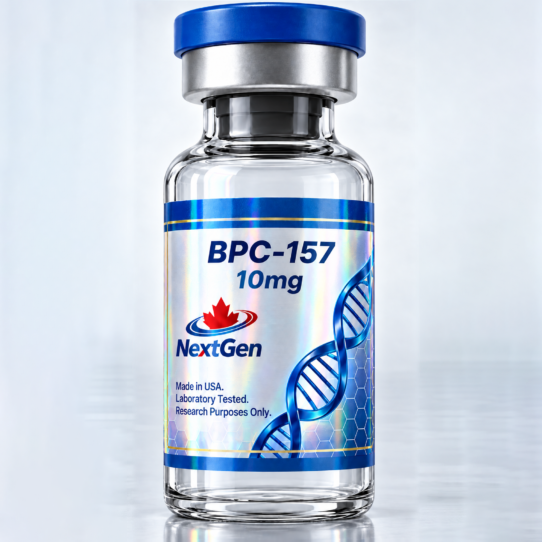
BPC-157
10 mg
$90.00 — or $90.00 Original price was: $90.00.$81.00Current price is: $81.00. / month
Ships within 1-2 Business Days
Subscribe monthly and save 10%
- Ship to Canada,USA & Mexico
- Secure Checkout
- Add to wishlist

PREMIUM QUALITY:
Pharmaceutical-grade

INDEPENDENT TESTING:
Quality verification

BATCH TRANSPARENCY:
Product information

GLOBAL ACCESS:
Canada, USA & Mexico
SUPPORTING A HEALTHIER YOU
Multiple Systems. One Research Focus.
BPC-157 has been studied in preclinical models for its potential to support connective tissue, gastrointestinal integrity, vascular pathways and overall recovery processes. While human clinical evidence remains limited, ongoing research suggests a wide range of biological activities that make BPC-157 an important peptide of interest.
- Studied in connective tissue models
- Explored in tendon and ligament research
- Investigated in gastrointestinal integrity models
- Studied in vascular and angiogenesis pathways
- Human clinical evidence remains limited
KEY AREAS OF HUMAN
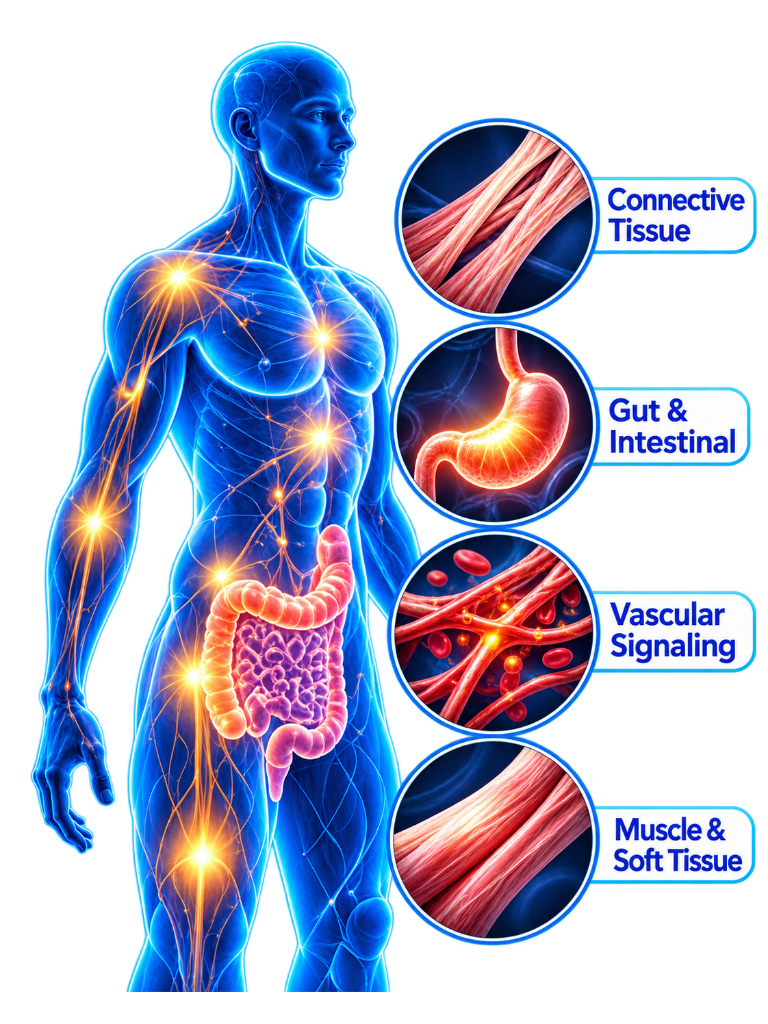
KEY AREAS OF HUMAN
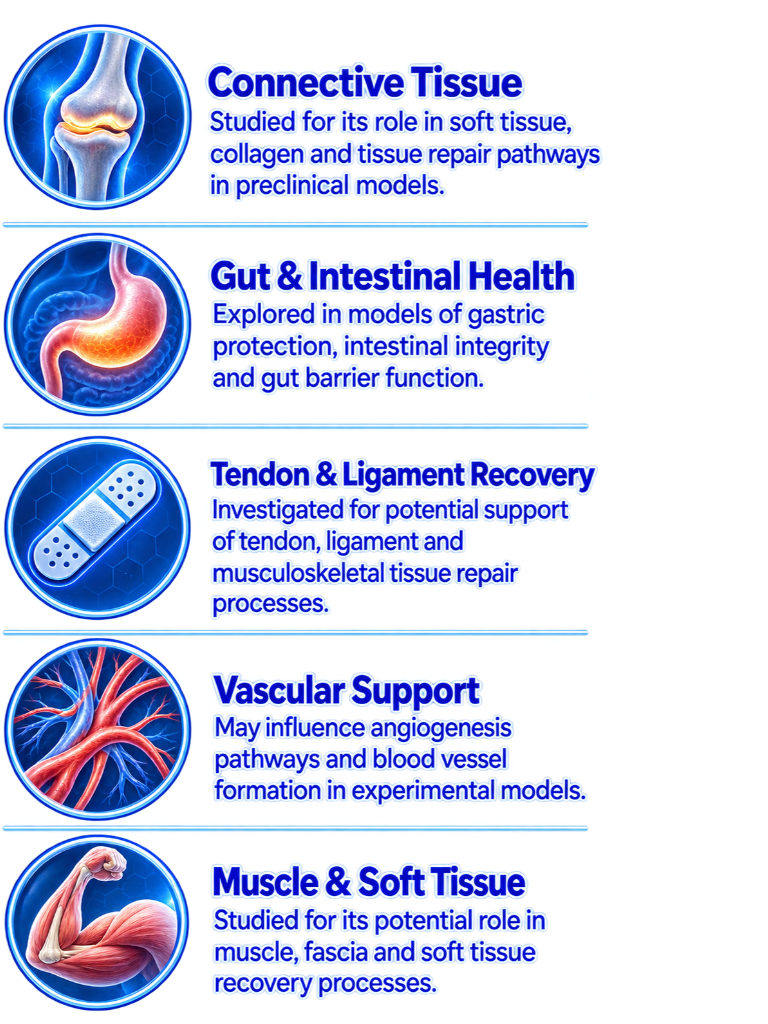
The Science
Evidence & Mechanism
BPC-157 is a 15-amino-acid peptide that has been investigated in experimental models for its potential to influence nitric oxide signaling, angiogenesis, fibroblast activity and gastrointestinal tissue integrity. Preclinical research suggests it may support tissue repair processes, modulate inflammatory pathways and promote cellular responses. While human clinical evidence remains limited, additional studies are needed to fully understand its effects in people.
May enhance NO pathways (research)
Studied for its role in new blood vessel formation (research)
May support cellular repair processes (research)
Explored for its effects on gastric and intestinal tissue (research)
Product Information
| Product Name | BPC-157 |
| Common Name | BPC-157 |
| Sequence | Ala-Glu-Asp-Gly (AEDG) |
| Molecular Weight | ~1,419 Da (peptide) |
| Strength | 10 mg (lyophilized) |
| Vial Size | 3 mL |
| Purity | > 99% (HPLC) |
| Product Format | Lyophilized powder |
| Storage | Store refrigerated (2°C - 8°C). Protect from light and moisture. |
| Intended Use | Research use only. Not approved for human use. |
Why Choose Nextgen
- Premium quality research products
- Independent laboratory testing
- Batch transparency
- Consistent quality standards
- Milligram App integration
- Dedicated customer support

FREQUENTLY ASKED QUESTIONS
Your Questions, Answered.
Find quick answers to common questions about this Product.
BPC-157 has been investigated for effects on tissue repair. In rat tendon tissue and cultured tendon cells, researchers observed increased cell movement, better survival under oxidative stress and greater outgrowth from tendon samples. These are promising laboratory findings, rather than proof of faster healing in people. The same experiment did not show a direct increase in cell multiplication.
A small retrospective human report described improvement in knee pain after BPC-157 treatment. Without a randomized comparison group, it cannot establish how much improvement came from the peptide. Knee-pain reports also do not demonstrate that BPC-157 repairs hip labral tears, bursitis or cartilage damage. Symptom relief and structural healing require different measurements.
Animal experiments have explored BPC-157 in stress-related behaviour and brain signalling. They do not establish benefits for depression or anxiety in people. Likewise, animal absorption studies and very small human safety reports cannot identify a clinically superior oral or injectable route. Route, formulation and measured outcomes must match before findings can be compared.
BPC-157, TB-500, KPV and CJC-1295 are studied for different actions. KPV research includes intestinal inflammatory signalling, while classic CJC-1295 human studies examined a long-acting growth-hormone-releasing analogue. These findings do not rank BPC-157 against those compounds or demonstrate benefits from combinations. For TB-500 and CJC-1295, confirming the exact molecular form is especially important.