CELLULAR HEALTH RESEARCH
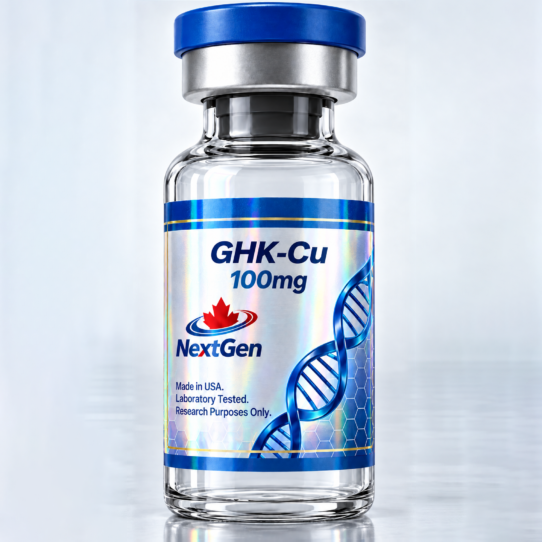
GHK-Cu
100 mg
Supports Healthy Skin, Tissue and Cellular Function.
GHK-Cu (Glycyl-L-Histidyl-L-Lysine) is a naturally occurring copper-binding peptide studied for its role in skin health, tissue remodeling, collagen and elastin production, and cellular repair processes. It is a key molecule in ongoing scientific research.
A Healthier Tomorrow
GHK-Cu
100 mg
$95.00 — or $95.00 Original price was: $95.00.$85.50Current price is: $85.50. / month
Ships within 1-2 Business Days
Subscribe monthly and save 10%
- Ship to Canada,USA & Mexico
- Secure Checkout
- Add to wishlist

PREMIUM QUALITY:
Pharmaceutical-grade

INDEPENDENT TESTING:
Quality verification

BATCH TRANSPARENCY:
Product information

GLOBAL ACCESS:
Canada, USA & Mexico
SUPPORTING A HEALTHIER YOU
Skin & Tissue Health. Real Possibilities.
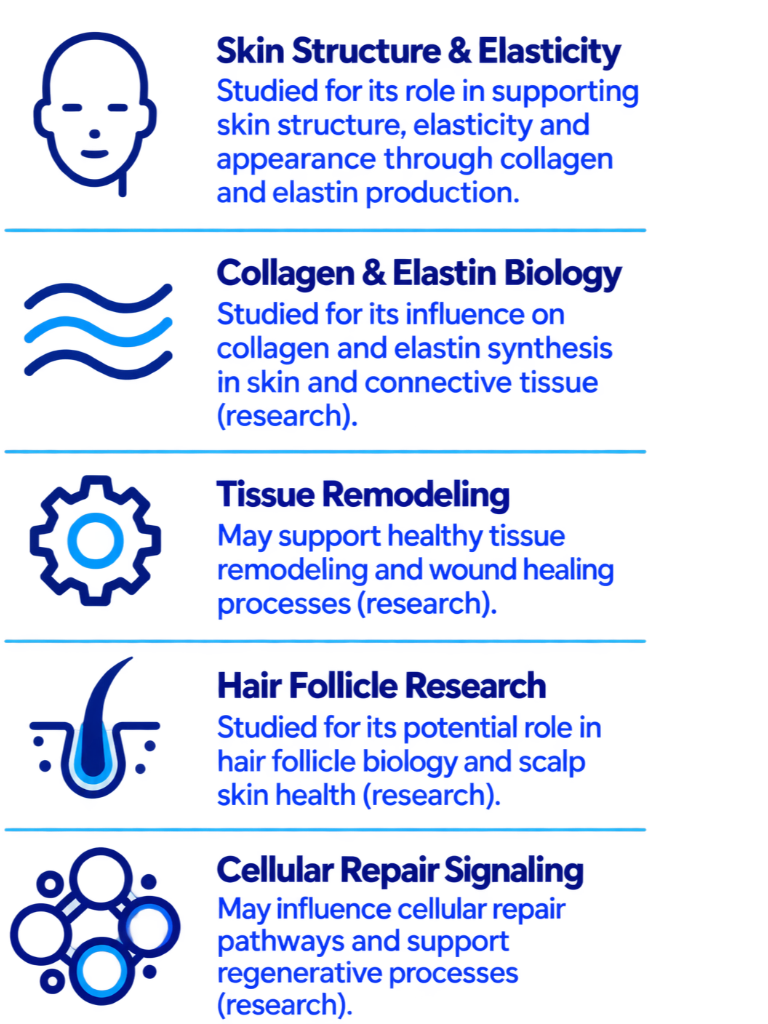
GHK-Cu is studied for its potential to support skin health, tissue remodeling, and cellular repair processes. By promoting collagen and elastin production, it may help maintain skin structure and elasticity, while also supporting wound healing and overall tissue regeneration. Its broad biological activity makes it a peptide of interest in dermatology, regenerative medicine, and longevity research
- Supports healthy skin and anti-aging pathways (research)
- Promotes collagen and elastin production (research)
- Supports tissue repair and regenerative processes (research)
- Studied for wound healing applications (research)
- Supports hair and scalp health (research)
- May help reduce inflammatory responses (research)
- Supports overall cellular health and longevity research
KEY AREAS OF HUMAN
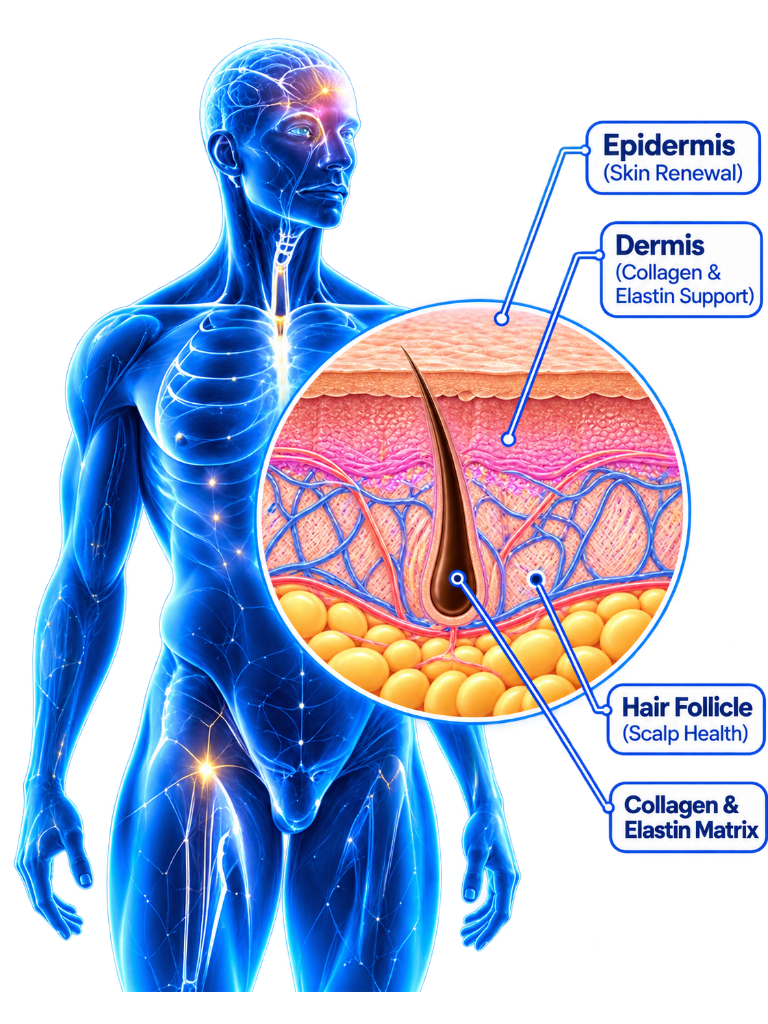
KEY AREAS OF HUMAN
The Science
Evidence & Mechanism
GHK-Cu is a copper(II) complex of glycyl-L-histidyl-L-lysine, a naturally occurring tripeptide. It is studied for its ability to modulate gene expression, promote collagen and elastin production, support angiogenesis, and influence cellular repair and anti-inflammatory pathways. Preclinical and human studies suggest GHK-Cu may play a role in skin regeneration, wound healing, and overall tissue health. However, further research is needed to fully understand its mechanisms and applications.
May promote collagen & elastin (research)
Studied for wound healing and tissue remodeling (research)
May help modulate inflammatory markers (research)
Influences cellular repair and gene expression (research)
Product Information
| Product Name | GHK-Cu |
| Common Name | Glycyl-L-Histidyl-L-Lysine (Copper peptide) |
| Molecule Weight | ~405.9 Da (peptide) |
| Strength | 100 mg (lyophilized) |
| Vial Size | 3 mL |
| Purity | > 99% (HPLC) |
| Product Format | Lyophilized powder |
| Storage | Store refrigerated (2°C–8°C). Protect from light. |
| Intended Use | Research use only. Not for human or veterinary use. |
Why Choose Nextgen
- Premium quality research products
- Independent laboratory testing
- Batch transparency
- Consistent quality standards
- Milligram App integration
- Dedicated customer support

FREQUENTLY ASKED QUESTIONS
Your Questions, Answered.
Find quick answers to common questions about this Product.
GHK-Cu is a three-amino-acid peptide bound to copper. Laboratory studies found increased collagen production in fibroblasts, the cells that help build connective tissue. Rat wound experiments also measured increased tissue-support material. These findings explain interest in skin and repair biology, but cannot by themselves establish firmer skin, wound healing or whole-body rejuvenation in people.
A small study of skin-care regimens after laser resurfacing found higher patient satisfaction with a GHK-Cu-containing regimen, but no significant objective advantage in redness, wrinkles or overall skin quality. This distinction matters when describing cosmetic benefits. Results for a finished topical formulation cannot be transferred directly to an unformulated research vial.
A small 2026 randomized split-face report studied a GHK-Cu serum on one eyebrow and a comparison serum on the other in 18 adults. It reported improvements in eyebrow hair count and thickness after 12 weeks. This preliminary finding concerns a specific topical serum and eyebrow outcome, rather than scalp-hair growth, injectable effects or an unformulated research vial.
GHK-Cu, unbound GHK and AHK-Cu are different materials. Hair-follicle experiments using AHK-Cu therefore do not prove hair-growth effects for GHK-Cu. Likewise, including GHK-Cu in GLOW or KLOW does not establish the effects of either blend. Each claim needs evidence for the exact molecule, formulation, tissue and outcome being described.